Tradition as Continuity Through Adaptation

Transmitted across generations through practice, symbol, and shared norm, tradition is less a fixed inheritance than a living negotiation between past and present. The core of any tradition – its meaning, its social function – tends to prove far more durable than the outward forms through which it is expressed.
Diwali, for instance, is now celebrated in Birmingham and Toronto as readily as in Varanasi, with electric lights replacing oil lamps and WhatsApp coordinating family gatherings. The ritual logic remains intact even as the material form shifts. Language follows a similar pattern – Welsh speakers in Patagonia have preserved grammatical structures for over a century while absorbing local vocabulary.
Reinterpretation, rather than abandonment, is how most traditions actually survive.
Migration, Globalisation and the Recomposition of Local Culture
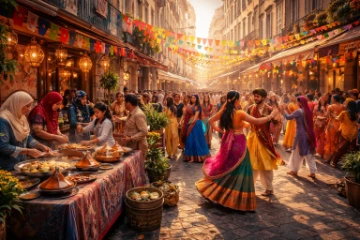
Movement across borders has never produced simple cultural erasure. When Moroccan families settled in Lyon or Gujarati communities established themselves in Leicester, they did not abandon their customs at the border – they carried them, adapted them, and quietly reshaped the societies they entered. This is cultural exchange in both directions, not one-way assimilation.
Diasporic communities often become more consciously attached to tradition than those who stayed behind, preserving festivals, languages, and culinary practices with a self-awareness that proximity to the homeland rarely demands.
Globalisation complicates this further. Homogenising pressures are real – local crafts, regional dialects, and inherited rituals do erode under the weight of mass media and commercial culture. Yet the same forces can trigger fierce local renewal, as communities rediscover and reassert what distinguishes them.
Technology, Generational Change and the Modern Social Fabric
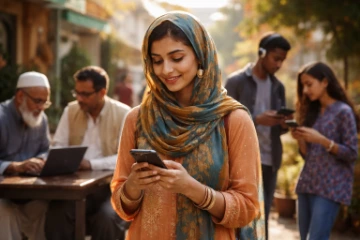
Digital communication has quietly reorganised how authority and belonging function within communities. Where once a village elder or parish priest anchored collective identity, younger generations now navigate identity through networks that cross national boundaries entirely.
Generational differences in cultural practice are rarely simple rebellion. A British-Pakistani woman in her twenties may observe Eid with genuine devotion while rejecting arranged marriage as an institution – inheriting tradition selectively, on her own interpretive terms.
Urbanisation accelerates this tendency. When extended families disperse across cities, rituals compress or migrate online. Societies rarely lose traditions outright; they renegotiate them through institutional adaptation – religious bodies updating practice, governments codifying heritage, communities digitising ceremony. Change and continuity coexist, imperfectly but persistently.
Change Does Not Erase Cultural Memory
What communities carry forward through periods of upheaval is rarely identical to what they began with, and that is not failure. Social change is not merely destructive but constitutive of living traditions – cultures endure precisely because they absorb pressure, contestation, and innovation rather than resist them entirely. The real task facing any community is one of discernment: deciding what must be preserved as foundational, what may be revised without loss of meaning, and what has already quietly transformed beyond recognition. Identity survives through this negotiation, not through stasis. Cultures that insist on perfect continuity tend to fossilise; those willing to contest their own inheritance tend to persist.